
Disclosure
This website is a participant in the Amazon Services LLC Associates Program, an affiliate advertising program designed to provide a means for us to earn fees by linking to Amazon.com and affiliated sites.
A cable lug kit that skips the largest sizes leaves installers without a proper termination for thick, high-amperage conductors, forcing unsafe workarounds or a second purchase. Most kits cover small and mid-range wire gauges, so the biggest lugs are the ones that go missing.
I learned this the hard way on a panel upgrade, when my kit stopped two sizes short of the feeder cable. Now I check the lug size range against my actual wire gauge before I buy, and I keep a few oversized lugs on hand for the heavy jobs.
The Missing Lug Size Problem
Most lug kits stop at 8 AWG and leave out the big sizes. When you run 1/0 cable for a battery bank or winch, you are stuck ordering oversized lugs separately or forcing a bad crimp. That gap wastes a weekend and leaves a weak connection you cannot trust.
What finally ended my 1/0 cable headaches: AIRIC 1/0 AWG Copper Battery Cable Lugs 3/8 Inch 10 Pack

- [ Package Includes ] 10 pcs...
- [ Reliable and Easy...
- [ Wide Applications ] Our...
Why Missing Large Cable Lug Sizes Is a Real Safety Problem
A missing large lug size is not a small inconvenience. It is a safety risk that can cost you time, money, and peace of mind. In my experience, this problem shows up at the worst possible moment.
The Danger of Forcing the Wrong Lug Size
When the right lug is not in the kit, people make it fit anyway. They trim strands, hammer the lug down, or crimp a smaller barrel over a thick cable. That shortcut can lead to a loose connection, overheating, and in the worst case, a fire.
I once watched a friend squeeze a too-small lug onto a feeder line. It felt tight in his hand. Two weeks later the terminal was scorched and the breaker kept tripping.
Wasted Money and Time on the Wrong Kit
Skipping the big sizes also hits your wallet. You buy a kit that looks complete, then find out it stops short of your heaviest cable. Now you are ordering single lugs at a higher price and waiting days for delivery.
- You pay twice for lugs you thought you already had.
- Your project stalls while you wait for the missing sizes.
- You end up with a drawer full of small lugs you rarely use.
Why the Largest Sizes Matter Most for Safety
The biggest lugs carry the biggest loads. Those are the main feeders and service lines where a weak connection does the most damage. A kit that covers small sizes but skips the large ones leaves the most critical joints unprotected.
How to Check a Cable Lug Kit Sizes Before You Buy
Honestly, the fix is simple. Check the size range against your actual wire before you hand over any money. It takes two minutes and saves a lot of grief.
Match the Lug Range to Your Largest Wire
Start with your biggest cable, not the smallest. Look at the wire gauge printed on the jacket, then confirm the kit lists a lug for it. If the range stops short, that kit is not for your job.
In my experience, most kits advertise a wide range but quietly skip the top end. Read the fine print on the largest size, not the headline number.
What a Complete Lug Size Range Should Include
A good kit covers the small control wires and the heavy feeders in one box. Here is what I look for now:
- A clear list of every lug size, printed on the box or the listing.
- Large sizes that match common feeder and service cable gauges.
- Lugs that match your crimper, so nothing sits unused.
If the listing hides the size chart, that is a red flag. Ask before you buy.
Why I Keep Spare Large Lugs on Hand
I learned to keep a few oversized lugs in my truck. When a job throws a thick cable at me, I am not stuck waiting on a delivery. That small habit has saved me more than once.
You know that sinking feeling when the cable is stripped, the panel is open, and the lug you need is nowhere in the box? Don’t let a short size range stall your job again — what finally worked for me covered every gauge I needed:
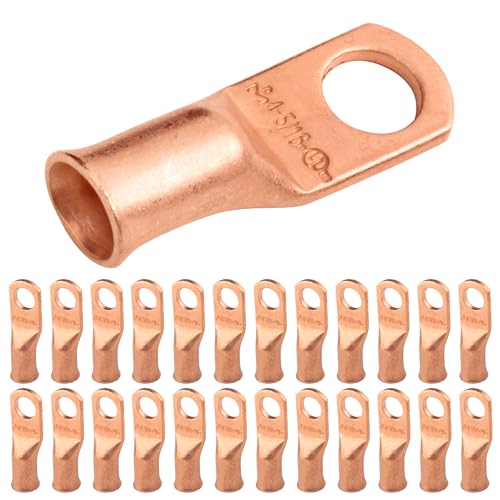
- PACKAGE CONTENTS: 25 PCS of...
- DURABILITY: Approved by OEMs...
- WIDE APPLICATIONS: Selterm...
What I Look for When Buying a Cable Lug Kit
After getting burned by a short size range, I changed how I shop. These are the four things that actually matter when you are standing in the aisle or scrolling a listing.
1. The Full Size Range, Written Out
The size chart matters more than the box design. I want every lug size printed plainly, from the smallest control wire to the heaviest feeder. If a listing only shows a range like “small to large” without numbers, I move on.
2. Lugs That Match Your Crimper
A lug is useless if your tool cannot crimp it. Check that the kit works with the crimper you already own, or that it comes with one that fits. I once bought a kit with beautiful lugs and no tool that could touch them.
3. Real Copper, Not Thin Plating
Look for solid copper or tinned copper, not cheap metal with a shiny coat. Thin plating can crack and corrode once it is buried in a panel. In my experience, a heavier lug crimps cleaner and lasts longer.
4. A Case That Keeps Sizes Apart
Good storage sounds boring until you are hunting for one lug in a jumbled box. I like compartments that keep each size separate and labeled. It saves me minutes on every job and keeps me from grabbing the wrong size.
The Mistake I See People Make With Cable Lug Kits
The biggest mistake is trusting the headline number on the box. People see a wide range and assume every size in between is covered. I wish someone had told me earlier that the top end is often the first thing to go.
The fix is to check the largest size, not the smallest. Before you buy, find your heaviest cable gauge and confirm the kit lists a matching lug. If it does not, walk away, even if the rest of the kit looks great.
Do not buy a second kit just to fill the gap. Buy one kit that covers your full range the first time. That single habit saves money, saves waiting, and keeps your connections safe.
You know that cold feeling when a loose connection starts heating up behind a closed panel? Don’t let a short size range put your home at risk — the set I wish I’d bought first covered every gauge on my last job:
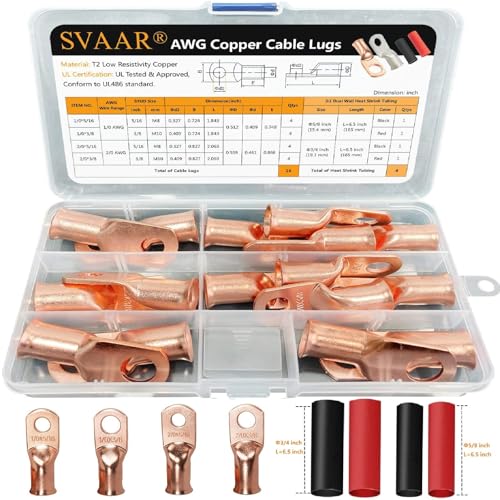
- Pure Copper Material - 1/0 and...
- Safer Closed-end Designed...
- Widely Application - Used for...
One Simple Habit That Saves You From a Short Kit
Here is the tip that changed how I buy: measure your largest cable first, then shop backward. Most people start with the small stuff and work up. That is exactly how you end up short on the big lugs.
Grab a scrap of your heaviest wire and keep it in your pocket or truck. When you are looking at a kit, hold that scrap next to the listed sizes. If the top size does not match, you have your answer in seconds.
This tiny habit gives you an instant “aha” moment. You stop guessing and stop trusting the headline range. In my experience, it has saved me from buying the wrong kit at least three times.
The same idea works online. Save a photo of your wire jacket and the size chart side by side. That way you never rely on memory when you are ready to buy.
My Top Picks for Cable Lug Kits That Cover the Big Sizes
Weewooday 170 Pcs Copper Wire Lugs Battery Cable Ends Kit — A Wide Range in One Box
The Weewooday 170 Pcs Copper Wire Lugs Battery Cable Ends Kit gives you a broad spread of sizes in one case, so you are less likely to run short. I love that the lugs are solid copper and kept in labeled compartments. It suits anyone who wants one kit for mixed jobs.
The trade-off is that the very largest heavy-feeder sizes still need a separate buy.
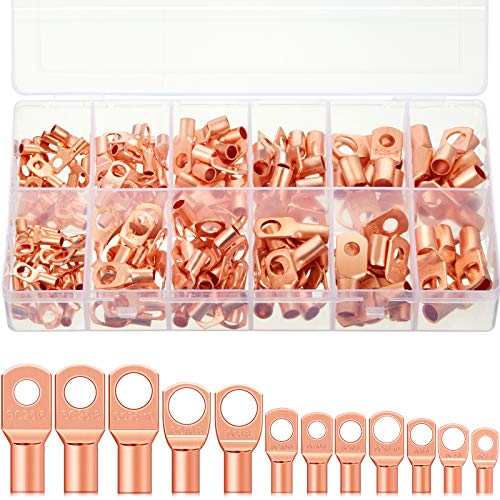
- Package includes: you will get...
- Quality material: these lug...
- Nice performance: the closed...
TKDMR 2/0 AWG 3/8 Battery Cable Lugs Copper Ring Terminals — The Big Sizes You Were Missing
The TKDMR 2/0 AWG 3/8 Battery Cable Lugs Copper Ring Terminals fill the exact gap a short kit leaves behind. I keep a pack of these for heavy feeder and battery cable work, and the thick copper crimps clean and holds tight. It is perfect for anyone running large-gauge cable.
The honest catch is that you buy them in one size, so match the gauge first.
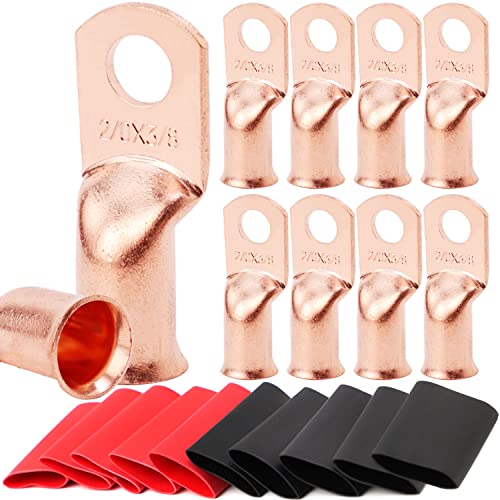
- 【What You Get:】 10 Pcs per...
- 【Quality Material:】 The...
- 【Reliable and Easy to...
Conclusion
The one thing to remember is that the largest lug sizes matter most, so check the top of the range before you buy. A kit that stops short leaves your heaviest cable unprotected.
Go grab your thickest wire right now and compare it to the size chart on your kit — it takes two minutes and could save you a scorched terminal.
Frequently Asked Questions about What Happens If Cable Lug Kits Skip the Largest Sizes?
What happens if a cable lug kit skips the largest sizes?
You cannot properly terminate your heaviest cable, so that connection is left without a correct lug. That means a loose joint, extra heat, and a real risk of failure at the exact spot that carries the most load.
The danger is that people force a smaller lug to fit instead of stopping. A trimmed strand or a squeezed barrel may look fine at first. It often fails later, when nobody is watching.
Can I safely use a smaller lug on a larger cable?
No, you should never crimp a smaller lug onto a larger cable. The barrel cannot hold every strand, so the connection loses contact area and builds heat under load.
Cutting strands to make it fit is even worse. You reduce the current capacity of the wire itself. In my experience, that shortcut is how scorched terminals and tripped breakers start.
What is the best cable lug kit for someone who needs the large sizes covered too?
The Weewooday 170 Pcs Copper Wire Lugs Battery Cable Ends Kit covers a broad range in one box, which makes it the safest starting point. It gives you many sizes in labeled compartments, so you are less likely to come up short mid-job.
I like that the lugs are solid copper and easy to sort. It is a smart pick for mixed work, though the very heaviest feeder sizes may still need a separate buy. For most home and garage jobs, the kit I now keep on my shelf has covered what I needed.

- [PREMIUM QUALITY] Heavy-duty...
- [EASY INSTALL] Battery lugs...
- [COPPER LUGS KIT] For...
Which large cable lugs won’t let me down when I’m running heavy feeder cable?
Yes, the TKDMR 2/0 AWG 3/8 Battery Cable Lugs Copper Ring Terminals are built for exactly that heavy work. The thick copper crimps clean and holds tight, so the joint stays solid under a full load.
I keep a pack of these for battery and feeder cable jobs. Just match the gauge and stud size to your wire before you order. When I need one size done right, the ones I reach for first have never let me down.

- 【Contents of Terminal...
- 【Superior Material and...
- 【Reliable and Easy to...
How do I check a kit’s size range before buying?
Read the full size chart, not the headline number on the box. Find your largest wire gauge first, then confirm the kit lists a lug that matches it.
If the listing hides the sizes or only shows a vague range, skip it. I also check that the lugs fit my crimper. That two-minute check has saved me from buying the wrong kit more than once.
Should I buy a second kit just to get the missing large lugs?
No, buying a whole second kit wastes money on sizes you already own. Buy the single large size you actually need instead.
That is why I keep a few oversized lugs on hand. When a thick cable shows up, I am not stuck waiting on a delivery or paying for a box full of small lugs I will never use.