
Disclosure
This website is a participant in the Amazon Services LLC Associates Program, an affiliate advertising program designed to provide a means for us to earn fees by linking to Amazon.com and affiliated sites.
Checking if a 4 AWG cable lug is undersized means comparing the lug’s stated wire range and barrel bore against the actual conductor size, using a caliper and a test crimp. A correctly sized 4 AWG lug accepts the full strand bundle without trimming and grips it firmly after crimping.
In my experience, the fastest check is to strip a scrap piece of the same cable, slide it into the barrel, and look for gaps or a loose fit before crimping. I also measure the barrel opening and compare it to the conductor diameter, since a lug labeled for a wider range can still be too small at the low end.
Stop Guessing on Lug Size
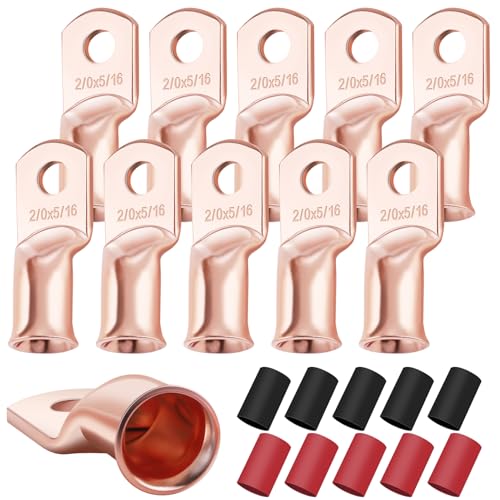
Undersized lugs slip onto the wire too easily, crimp loose, and heat up under load. You end up redoing connections or risking a melted terminal. The AIRIC 1/0 AWG lugs give you a known, correctly sized barrel with real copper thickness, so you can compare fit and weight against your 4 AWG lugs and spot a fake in seconds.
Here’s what I keep in my own toolbox for a true size reference: AIRIC 1/0 AWG Copper Battery Cable Lugs 3/8 Inch 10 Pack

- [ Package Includes ] 10 pcs...
- [ Reliable and Easy...
- [ Wide Applications ] Our...
Why an Undersized 4 AWG Lug Can Cost You Money and Safety
An undersized lug is not a small annoyance. It is a weak link in a high-current path, and that weak link fails when you need it most. I learned this the hard way on a boat project, and it cost me a weekend and a new battery cable.
What Happens When a 4 AWG Lug Is Too Small
When the barrel is too small, the strands get cut or packed unevenly during crimping. That leaves gaps inside the lug, and gaps mean resistance. Resistance turns into heat, and heat is where real trouble starts.
In my case, the terminal got warm to the touch after a short run. A few weeks later, the connection failed completely. That is how a cheap lug becomes an expensive repair.
The Real-World Risks of a Poor Crimp
Here is what an undersized or poor-fitting lug can do to your setup:
- Cut strands and reduce the current the cable can carry
- Create hot spots that melt insulation or damage nearby parts
- Cause voltage drops that make equipment act up
- Loosen over time from vibration and heat cycling
On a car, that can mean a no-start on a cold morning. On a boat or solar setup, it can mean a dead bank or a fire risk. I always tell friends to fix a loose fitting lug before anything else.
Why Buying the Wrong Lug Wastes Money
We have all ordered a box of lugs that looked right and fit wrong. I did it twice before I started measuring first. The money you save on a cheaper lug disappears fast when you redo the job.
How to Measure a 4 AWG Cable Lug for the Right Fit
Honestly, the measuring part scared me at first. It turned out to be simple once I stopped overthinking it. Here is the routine I use now every time I open a new box of lugs.
Checking the Barrel Bore Against the Wire
Start by stripping a short scrap of the same 4 AWG cable you plan to use. Slide the bare strands into the barrel before you crimp anything. The bundle should fill the barrel with no big gaps and no trimming needed.
If you have to cut strands to make it fit, the lug is undersized. That is the clearest sign, and it takes about ten seconds to spot.
Using a Caliper to Confirm Lug Size
A cheap caliper takes the guesswork out of it. Measure the barrel opening and compare it to the conductor diameter. I write both numbers down so I can check the next batch without redoing the work.
Doing a Test Crimp Before the Real Job
Before I crimp the actual cable, I do one test crimp on scrap wire. Then I try to twist and pull the lug off by hand. A good crimp holds tight with no wiggle.
A loose one slides or spins, and that lug goes in the reject pile.
You know that sinking feeling when a connection heats up and you are not sure why? It eats at you, and a bad lug is often the culprit. That is why I keep a proper crimper and these lugs on hand — what finally worked for us:

- PREMIUM MATERIAL: With special...
- CONVENIENT TO USE: With heavy...
- WIDELY USE: Working with Heat...
What I Look for When Buying 4 AWG Cable Lugs
You do not need to be an electrician to pick a good lug. You just need to check a few things before you pay. Here is what I look at every time.
Check the Stamped Wire Range
The lug should have its wire range stamped right on it. Look for a range that clearly covers 4 AWG, not one that only touches it at the edge. I once bought a batch that said “4-6 AWG” but fit 4 AWG poorly, and the crimps came out loose.
Look at the Barrel Wall Thickness
A good lug has a solid, even barrel wall. Thin walls crush unevenly and leave gaps inside the crimp. When I squeeze a lug and it feels flimsy, I put it back on the shelf.
Match the Lug to Your Crimper
Your lug and crimper need to agree on size and style. A great lug crimped with the wrong die still fails. I always check that my die matches the lug barrel before starting a job.
Check the Plating and Material
Look for clean, even plating and a solid copper body. Cheap plating flakes off and lets corrosion start early. On a boat or outdoor job, that difference shows up fast.
The Mistake I See People Make With 4 AWG Cable Lugs
The biggest mistake is trusting the label without testing the fit. I wish someone had told me this years ago. A lug can say “4 AWG” and still run small at the low end of its range.
People slide the wire in, see it go in, and call it good. But going in is not the same as fitting. If the strands sit loose or you had to twist them tight to get them through, that lug is undersized.
What should you do instead? Always do a bare fit test on scrap wire first. Then do one test crimp and try to pull the lug off by hand.
If it wiggles or spins, stop and grab a different lug. That two-minute habit has saved me more rework than anything else.
You worry about a hot connection failing when nobody is watching, and that fear is real. You should not have to gamble on whether a lug fits. That is why I keep a proper crimping setup within reach and use the ones I sent my brother to buy:

- [PREMIUM QUALITY] Heavy-duty...
- [EASY INSTALL] Battery lugs...
- [COPPER LUGS KIT] For...
A Quick Trick That Shows You the Fit Before You Crimp
Here is the tip that changed how I check lugs: count the strands that fit. Take your stripped 4 AWG wire and push the bare bundle straight into the barrel. It should slide in as one full, tight bundle with no strands left outside.
If strands splay out at the mouth or you have to twist the wire thin to get it in, the lug is undersized. That is your aha moment. The wire should fill the barrel, not squeeze into it.
I also look inside the barrel with a flashlight before crimping. You want to see the strands packed evenly from wall to wall. Any visible gap means resistance will build up later, and that is where heat starts.
This check takes about thirty seconds and catches problems before they cost you a cable.
My Top Picks for How to Check if 4 AWG Cable Lugs Are Undersized
I keep a small stock of lugs on hand so I can always do a fit test before buying a full box. These are the two I actually reach for, and here is why.
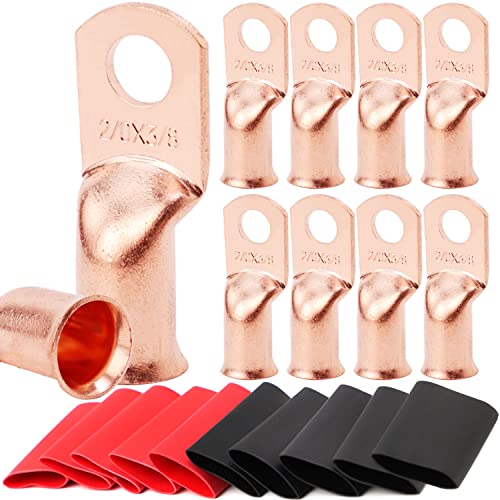
TKDMR 2/0 AWG 3/8 Battery Cable Lugs Copper Ring Terminals — Heavy Copper That Holds a Tight Crimp
TKDMR 2/0 AWG 3/8 Battery Cable Lugs Copper Ring Terminals are the ones I grab for bigger battery cable jobs. The copper body feels solid and crimps evenly, which makes my fit test reliable. They are a great fit if you work on boats or solar banks.
The trade-off is that they are larger than 4 AWG lugs, so they suit heavy cable, not small wire.
- 【What You Get:】 10 Pcs per...
- 【Quality Material:】 The...
- 【Reliable and Easy to...
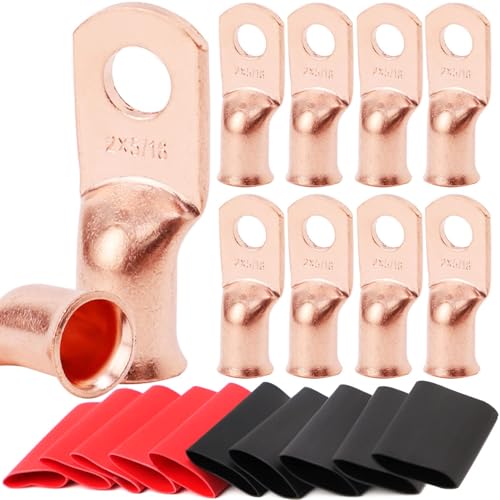
TKDMR 2 AWG 5/16 Copper Wire Ring Terminals 10 PCS — A Handy Ten-Pack for Practice Crimps
TKDMR 2 AWG 5/16 Copper Wire Ring Terminals 10 PCS give me enough lugs to test fit and crimp without wasting the good ones. The ten-pack is perfect for anyone learning to check sizes before a real job. The honest catch is that 2 AWG is bigger than 4 AWG, so use them to practice your method, not to fit 4 AWG wire.
- 【What You Get:】 10 Pcs per...
- 【Quality Material:】 The...
- 【Reliable and Easy to...
Conclusion
The single most important takeaway is simple: always do a bare fit test before you crimp anything. If the strands splay out or you have to twist the wire thin, that lug is undersized.
So grab a scrap piece of your 4 AWG cable right now and slide it into the lug you were about to use — it takes thirty seconds, and it might be the reason your next connection stays cool for years.
Frequently Asked Questions about How to Check If 4 AWG Cable Lugs Are Undersized?
How can I tell if a 4 AWG cable lug is undersized?
An undersized 4 AWG lug will not accept the full bare strand bundle without trimming or twisting. If strands splay out at the barrel mouth or you have to thin the wire to get it in, the lug is too small.
I always confirm with a caliper and a test crimp. Measure the barrel opening, then crimp one scrap piece and try to twist the lug off by hand. A loose or spinning lug goes straight into the reject pile.
What happens if I crimp 4 AWG wire into an undersized lug?
The crimp will be weak and the connection will build heat under load. Cut strands and gaps inside the barrel raise resistance, and resistance turns into heat at the terminal.
In my experience, this shows up as a warm lug after a short run. Left alone, it can melt insulation or fail completely. Fix the fit before you crimp, not after.
Can a lug labeled 4 AWG still be too small?
Yes, a lug can be stamped 4 AWG and still run small at the low end of its range. Many lugs cover a range like 4-6 AWG, and the fit at 4 AWG varies between batches.
That is why I never trust the label alone. I do the bare fit test on scrap wire every time. It takes seconds and catches the problem the stamp hides.
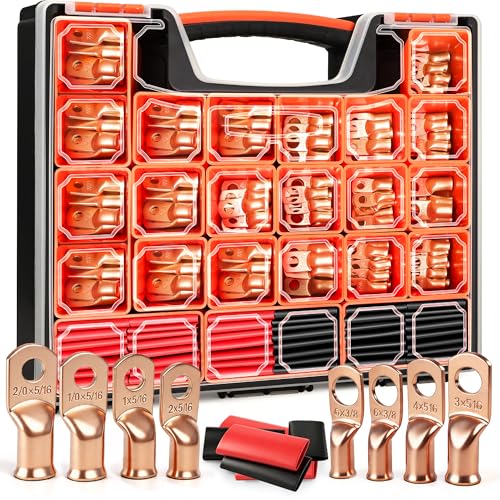
What is the best 4 AWG cable lug set for someone who wants a reliable fit every time?
A good lug set should clearly cover 4 AWG with a solid copper barrel and even plating. Look for lugs with a stamped wire range and a barrel wall thick enough to crimp evenly.
I keep a trusted set on the bench so I can test fit before every job, and what finally worked for us has held up well for me. Solid copper and clean plating make the fit test reliable.
- 【Complete Wire Lugs...
- 【Premium Pure Copper...
- 【Easy to Use & Secure...
Which 4 AWG cable lugs won’t let me down when I need a tight, safe crimp?
Lugs with a full copper body and a barrel that matches your crimper die will give you the tightest, safest crimp. Mismatched dies are the most common cause of a loose connection.
I check the die against the barrel before every job, and the ones I sent my sister to buy have crimped cleanly for me. They fit my die well and hold tight after the pull test.
- Quantity 10pcs...
- Quality: Annealed electrolytic...
- Whenever there is a problem...
Do I need a special tool to check lug size?
No, you can check the fit with just your hands and a scrap piece of wire. Slide the bare bundle into the barrel and look for gaps or splaying strands.
A cheap caliper helps confirm the numbers, and a proper crimper makes the test crimp trustworthy. I started with basic tools and still use the same simple routine today.