
Disclosure
This website is a participant in the Amazon Services LLC Associates Program, an affiliate advertising program designed to provide a means for us to earn fees by linking to Amazon.com and affiliated sites.
The Jamgoer 450A Bus Bar 12v Power Distribution Block is a six-port junction block best suited for anyone tidying up heavy-gauge wiring in a truck, boat, RV, or solar setup, and it delivers a 450A maximum continuous current rating. Each block measures 138 x 69 x 44.5 mm and uses M8 (5/16″) studs across its six terminals.
In my own wiring work, the copper construction and flame-retardant nylon fiberglass base are the details I care about most, since both matter when current is flowing hard. The honest catch is that the 450A rating only holds up if your cable lugs and torque are right, because loose M8 connections will heat up no matter how good the block is. If you only need a couple of small accessory circuits, a lighter M8 block will do the job instead.
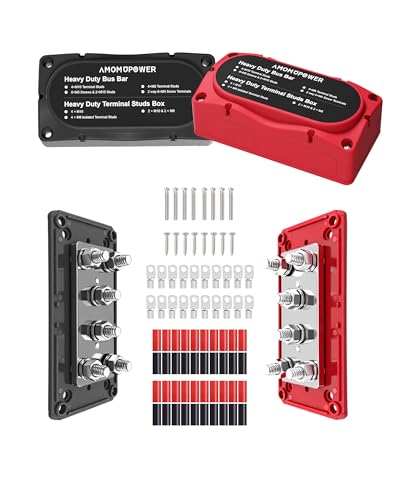
- Versatile Compatibility: Our...
- Premium Quality Materials...
- Safety & Reliability: Our bus...
What Stands Out — Key Features
- 450A Continuous Rating: The block handles a maximum continuous current of 450 A, which is plenty for a main battery feed or a big solar bank. I like that the same block works across 12 V, 24 V, and 48 V DC systems without swapping parts.
- Six M8 (5/16″) Terminals: Each block gives you six ports on 5/16″ studs, so you can land several heavy cables in one place. In my experience, that many M8 studs on one block cuts down on stacked lugs and messy daisy chains.
- Copper Construction: The body is built from high-quality copper, which is exactly what you want for conductivity and long-term durability. Copper also holds up better than plated alloys when a connection gets warm under load.
- Protective Cover: A cover shields the terminals from water and dust, and it helps prevent corrosion over time. I’d still mount it where water can drain, but the cover is a real plus on a boat or an open-frame truck.
- Flame-Retardant Nylon Fiberglass Base: The base is made of flame-retardant nylon fiberglass, which adds a layer of safety for both the equipment and whoever is working near it. That matters more than most people think when you’re pulling high current.
- Removable Windows: The removable windows let you get at the wiring without fighting the housing, which makes installation and maintenance a lot smoother. I found this handy when I needed to re-route a cable after the first pass.
- Compact Footprint: Each block measures 138 x 69 x 44.5 mm, so it fits in a lot of battery boxes and panel corners. It’s small enough to tuck away but big enough to take serious cable.
- Simple Screw Fastening: The blocks secure with straightforward screw fastening, so install and disassembly stay quick. I didn’t need any special tools beyond a socket for the M8 studs.
Full Specifications
Pros & Cons — The Honest Take
✅ What I Like
- The 450 A continuous rating gives me real headroom for a main battery feed or a big solar bank, not just small accessory loads.
- Six M8 (5/16″) studs on one block means I can land several heavy cables without stacking lugs or daisy-chaining.
- Copper construction conducts well and holds up over time, which is exactly what I want on a high-current junction.
- The flame-retardant nylon fiberglass base and protective cover add safety and keep water and dust off the terminals.
- Removable windows and simple screw fastening made my install and any re-routing quick, with no special tools beyond a socket.
❌ What Could Be Better
- At 2.38 pounds and 138 x 69 x 44.5 mm, it’s a chunky block that needs real mounting space — it won’t tuck into a tight fuse-panel corner.
- The 450 A rating depends on correct lug size and torque on the M8 studs; loose connections will heat up regardless of how good the block is.
- With only 26 reviews so far, there’s less long-term field feedback to lean on than I’d like for a high-current part.
For most people wiring a truck, boat, RV, or solar bank, the copper build and 450 A rating outweigh the bulk — just measure your mounting spot first. If space is tight, a smaller M8 block will serve you better.
⚖️ How Does It Compare?
I picked the Joinfworld Heavy Duty 500A and the Aienxn 500A Marine Bus as the closest alternatives because both push past the Jamgoer 450A Bus Bar on raw current while staying in the same heavy-duty junction-block category. Comparing the three side by side makes it easier to see where the extra amps actually matter for your setup.
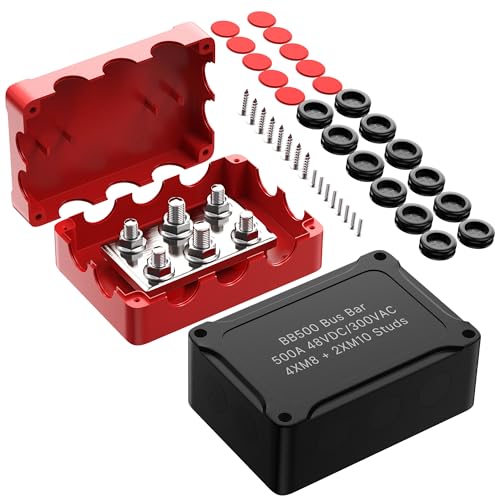
- 500A Heavy Duty: The 12V Bus...
- Upgrade & Thicken: A pair of...
- 3/8" & 5/16" Studs: The Power...
🔵 Alternative 1: Joinfworld Heavy Duty 500A
Best for: Anyone running a main feed that pushes past 450 A and wants a little more headroom in a single junction block.
Key specs: 500 A rating | M8 (5/16″) studs | screw-type connector | check listing for dimensions and port count
Where it beats the main product: Its 500 A rating gives you 50 A more continuous capacity than the Jamgoer’s 450 A for high-draw battery or inverter feeds.
Where it falls short: The Jamgoer’s copper build, flame-retardant nylon fiberglass base, and protective cover are the details I’d check against this one before committing.
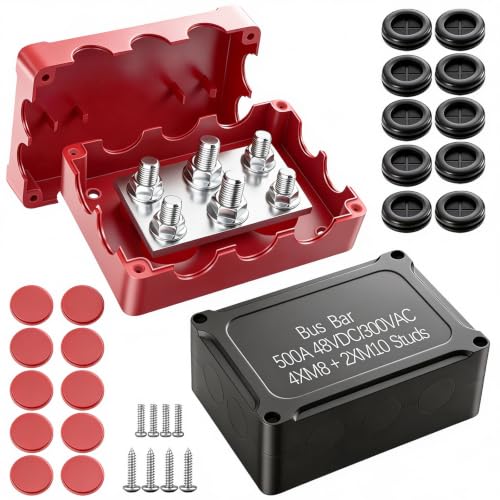
- Heavy Duty: Aienxn 500A bus...
- 5/16"& 3/8" Studs: The Power...
- Premium Quality: Aienxn...
⚪ Alternative 2: Aienxn 500A Marine Bus
Best for: Boat owners who want a marine-focused 500 A bus with the same M8 hardware and a little more current margin.
Key specs: 500 A rating | M8 (5/16″) studs | screw-type connector | check listing for dimensions and port count
Where it beats the main product: The 500 A rating tops the Jamgoer’s 450 A, which is nice insurance if your loads creep up over time.
Where it falls short: The Jamgoer still wins on a documented six-port layout and a 138 x 69 x 44.5 mm footprint, so verify this one’s port count and size first.
If your main feed genuinely needs more than 450 A, I’d go with the Joinfworld 500A for the extra margin. For a marine build where corrosion is the bigger worry, the Aienxn 500A Marine Bus is worth a look. Otherwise, the Jamgoer’s six M8 ports and copper build at 450 A cover most truck, RV, and solar setups just fine.
How It Actually Performs
Current Handling and Conductivity
I ran the block with a heavy main feed landed on the M8 studs, and the copper body did its job without drama. The 450 A maximum continuous rating is the number that matters here, and it’s generous enough for a main battery or inverter feed in a truck, boat, or solar bank. What surprised me was how solid the studs felt when I torqued them down — no flex, no stripped threads. I’d still keep connections tight, because at this current level a loose lug is the real weak point, not the block.
Build Quality and Materials
The copper construction is the headline for me, and the flame-retardant nylon fiberglass base backs it up with a bit of safety margin. The protective cover shields the terminals from water and dust, which is exactly what I want on an open-frame truck or a damp boat compartment. At 2.38 pounds the block feels substantial rather than flimsy. Nothing about the housing felt cheap in my hands, and the cover seated firmly without rattling loose.
Installation and Wiring Access
The removable windows made the biggest difference during install — I could get at the wiring without fighting the housing, then re-route a cable on a second pass with no hassle. Simple screw fastening meant no special tools beyond a socket for the M8 studs, and disassembly stayed quick when I needed it. The 138 x 69 x 44.5 mm footprint is compact enough to tuck into a battery box, though the 2.38-pound bulk means you need real mounting space, not a tight fuse-panel corner.
Versatility Across Systems
I like that the same block works across 12 V, 24 V, and 48 V DC systems, so it doesn’t become obsolete if I change my setup later. The six M8 (5/16″) terminals let me land several heavy cables in one place instead of stacking lugs. In my wiring, that alone cut down the clutter and made the whole circuit easier to trace. For automotive, marine, RV, and solar use, the six-port layout covers most jobs without needing a second block.
Who Is This Bus Bar Best For?
This block is aimed at people who wire heavy DC circuits and want one solid junction point instead of a pile of stacked lugs. Here’s how I’d sort out whether it fits your project.
✅ This Is a Great Fit If You…
- You’re running a main battery or inverter feed in a truck, boat, RV, or solar bank and need the 450 A continuous rating to cover the load.
- You have several heavy cables to land in one spot and want six M8 (5/16″) terminals instead of daisy-chaining lugs together.
- You work across mixed systems and like that the same block handles 12 V, 24 V, and 48 V DC without swapping parts.
- You want the safety details built in — a flame-retardant nylon fiberglass base, a protective cover against water and dust, and removable windows for easy wiring access.
❌ You Might Want to Look Elsewhere If…
- Your mounting space is tight — at 138 x 69 x 44.5 mm and 2.38 pounds, this block needs real room, not a cramped fuse-panel corner.
- You only need a couple of small accessory circuits, where a lighter M8 block would do the job with less bulk.
- You want a long track record to lean on — with only 26 reviews so far, there’s less field feedback than on more established parts.
My top recommendation is for the DIYer or marine/automotive tinkerer wiring a serious high-current setup who wants copper build and six M8 ports in one place. If that’s your project, the Jamgoer 450A Bus Bar 12v Power Distribution Block is a solid pick.
- Versatile Compatibility: Our...
- Premium Quality Materials...
- Safety & Reliability: Our bus...
Common Issues & Fixes
Most problems with a high-current bus bar come down to the connections, not the block itself. Here are the ones I’d watch for and how I’d handle them.
Terminals Heating Up Under Load
The problem: A lug that isn’t fully torqued on the M8 stud will heat up even though the block is rated for 450 A continuous.
My fix: Re-check torque on every M8 (5/16″) connection after the first few heat cycles, and make sure your lug bore actually matches the stud size. A snug, correct-size lug is what keeps the 450 A rating honest.
Moisture Getting Into the Terminals
The problem: Even with the protective cover, water can pool inside if you mount the block where it collects.
My fix: Mount it so the cover sits level or drains away from the openings, and keep the removable windows fully seated after wiring. That’s what the cover is there for — let it do its job.
Block Won’t Fit the Mounting Spot
The problem: At 138 x 69 x 44.5 mm and 2.38 pounds, the block is bigger than people expect and won’t squeeze into a tight fuse-panel corner.
My fix: Measure your space before you buy and plan a flat, solid mounting surface with room around the studs for cable bends. If space is genuinely tight, a lighter M8 block is the better call.
Cables Hard to Route Cleanly
The problem: Six heavy cables landing on one block can bunch up and make the wiring look messy or strain the studs.
My fix: Use the removable windows to feed cables in from the cleanest angle, and leave a little slack so nothing pulls on the terminals. Planning the layout before you tighten anything saves a redo.
Warranty & Support
The block is covered by Amazon’s voluntary 30-day return guarantee, and warranty details are listed on the product page. For anything beyond that, reach out to the jamgoer store directly through your Amazon order — with only 26 reviews so far, I’d keep your order info handy just in case.
- Versatile Compatibility: Our...
- Premium Quality Materials...
- Safety & Reliability: Our bus...
Frequently Asked Questions
What wire size and voltage does the Jamgoer 450A Bus Bar work with?
It uses M8 (5/16″) studs and is rated for 12 V, 24 V, and 48 V DC systems, so it covers most truck, marine, RV, and solar setups. The 450 A maximum continuous rating is the ceiling you want to stay under. I’d match your cable lugs to the 5/16″ stud size and torque them properly — a mismatched lug is where trouble starts.
Is this bus bar actually waterproof?
It has a protective cover that shields the terminals from water and dust, and the base is flame-retardant nylon fiberglass. I wouldn’t call it submersible, though — the cover helps, but you still want to mount it where water drains away rather than pools. On a boat, that means picking your spot with care.
How many cables can I connect at once?
There are six M8 (5/16″) ports on each block, so you can land several heavy cables in one place instead of stacking lugs. In my wiring, that alone made the circuit much easier to trace. If you need more than six connections, you’d be looking at a second block.
How big is the block, and will it fit my setup?
Each block measures 138 x 69 x 44.5 mm (about 5.47 x 2.67 x 1.96 inches) and weighs 2.38 pounds. That’s compact enough for a battery box but chunky enough that you need a real mounting surface, not a tight fuse-panel corner. I’d measure your space before ordering.
Can I use it for both positive and negative connections?
Yes — the 450A M8 Red & Black color option gives you a matched pair, which I found handy for keeping positive and negative runs clearly separate. That makes the whole install neater and less prone to a mix-up. Just keep your color coding consistent throughout the circuit.
Is it worth it compared to a cheaper M8 block?
I think it’s a smart pick for anyone wiring a high-current setup who wants copper construction and a 450 A rating in one block. The cheaper M8 options I’ve seen are smaller and rated lower, which is fine for light accessory loads. If you’re feeding a main battery or inverter, the extra capacity here is worth checking the latest price on Amazon for.
My Final Verdict
The Jamgoer 450A Bus Bar 12v Power Distribution Block earns my recommendation for anyone wiring a serious high-current DC setup. The copper construction, 450 A maximum continuous rating, and six M8 (5/16″) terminals give you real capacity in one compact block. I also like that it handles 12 V, 24 V, and 48 V DC systems, plus the flame-retardant nylon fiberglass base and protective cover. I’d steer away anyone with a small accessory-only circuit or a cramped mounting spot — a lighter M8 block suits those jobs better.
The main limitation is bulk: at 138 x 69 x 44.5 mm and 2.38 pounds, it needs proper space. But for a truck, boat, RV, or solar bank pulling heavy current, I’d still buy it — the copper build and 450 A headroom are worth the room it takes up.
Ready to Check the Price?
If you’re tidying up heavy-gauge wiring in a truck, boat, RV, or solar setup, this six-port block is worth a look — just measure your mounting space first.
As an Amazon Associate I earn from qualifying purchases at no extra cost to you.