Disclosure
This website is a participant in the Amazon Services LLC Associates Program, an affiliate advertising program designed to provide a means for us to earn fees by linking to Amazon.com and affiliated sites.
The CRC QD Electronic Cleaner is an 11 oz aerosol contact cleaner best suited for anyone cleaning circuit boards, contacts, and sensitive electronics, and it delivers a residue-free, fast-evaporating finish. The formula combines petroleum distillate and alcohol, comes in a single 11-fluid-ounce can, and carries a 4.8 out of 5 rating across 15,620 reviews.
In my experience, the alcohol-based solvent flashes off quickly, which is exactly what you want when you’re spraying around plastic sockets and nylon plugs. The honest catch is that it’s a solvent, not a lubricant, so it strips oils and won’t protect contacts from corrosion on its own. If you need a cleaner that also leaves a protective film, look at a contact cleaner with a lubricating additive instead.

- QD ELECTRONICS CLEANER: A...
- FORMULA: With quick-drying...
- APPLICATIONS: QD Electronic...
What Stands Out — Key Features
- Quick-Drying Formula: The petroleum distillate and alcohol mix evaporates fast, so I’m not waiting around for parts to dry before reassembly.
- No Residue: It’s residue-free, which means no oily film left behind on circuit boards or contacts after the solvent flashes off.
- Plastic Safe: CRC lists it as safe on plastics, nylon, and PVC, so I can spray around sockets and plugs without worrying about melting anything.
- Wide Application Range: I’ve used it on computer components, relay switches, coin mechanisms, and lighting contacts — it’s a genuinely versatile can to keep on the bench.
- Flux Removal: It handles flux removal after soldering, which is one of the main reasons I keep a can around.
- Unscented: The formula is unscented, which keeps the fumes from being any more unpleasant than they need to be in a small workspace.
- 11 oz Aerosol Can: The 11-fluid-ounce aerosol gives decent coverage per can, and the 14.4-ounce item weight feels solid in hand.
- Top Seller in Its Category: It ranks #1 in Electrical Cleaners on Amazon with over 10K bought in the past month, which tracks with how often I reach for it.
Full Specifications
Pros & Cons — The Honest Take
✅ What I Like
- The alcohol and petroleum distillate formula dries fast and leaves zero residue, so I can spray a board and reassemble almost right away.
- It’s plastic safe on nylon, PVC, and fiberglass, which gives me confidence spraying around sockets and plugs.
- One 11-fluid-ounce aerosol can covers a lot of small jobs, and the 14.4-ounce total weight keeps it easy to control in tight spaces.
- It handles flux removal after soldering just as well as general contact cleaning.
- A 4.8 out of 5 rating across 15,620 reviews and over 10K bought in the past month tells me plenty of people trust it the way I do.
❌ What Could Be Better
- It’s a pure solvent with no lubricating or protective additive, so it cleans contacts but doesn’t guard against future corrosion.
- It’s an aerosol can only — no precision dropper or brush option for really tight spots.
- The solvent fumes are strong even though it’s listed as unscented, so I always spray in a ventilated area.
For everyday contact and board cleaning, the fast dry time and residue-free finish make this an easy can to keep on the bench. Just go in knowing it cleans without protecting, so plan on a separate protectant if you need long-term corrosion defense.
⚖️ How Does It Compare?
I put the CRC QD Electronic Cleaner up against two very different bench companions: a competing contact cleaner and a mechanical battery brush. They cover the two things the CRC can’t do on its own — an alternative solvent formula and physical terminal cleaning.
- ONE-STEP ELECTRICAL CONTACT...
- CLEANS BATTERY TERMINALS...
- SAFE FOR SENSITIVE...
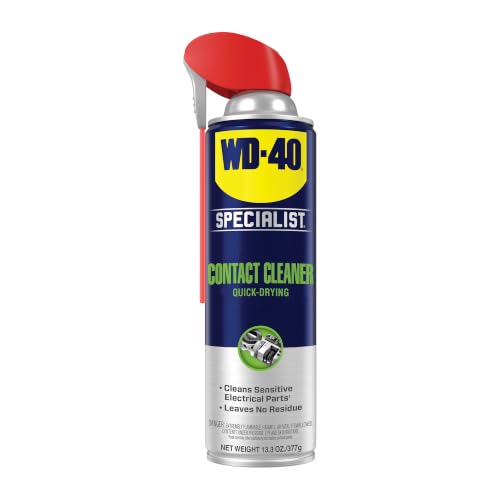
🔵 Alternative 1: WD-40 Specialist Contact Cleaner
Best for: Anyone who wants a dedicated contact cleaner from a brand they already trust on the workbench.
Key specs: Aerosol contact cleaner | check listing for exact can size | solvent-based formula | check listing for dry time
Where it beats the main product: It’s the closest direct swap, so you get a second proven solvent option if the CRC can is out of stock.
Where it falls short: The CRC’s 4.8 out of 5 across 15,620 reviews gives it a much deeper track record to lean on.
- Cleans dirt and corrosion from...
- The external brush cleans...
- Case is made of high impact...
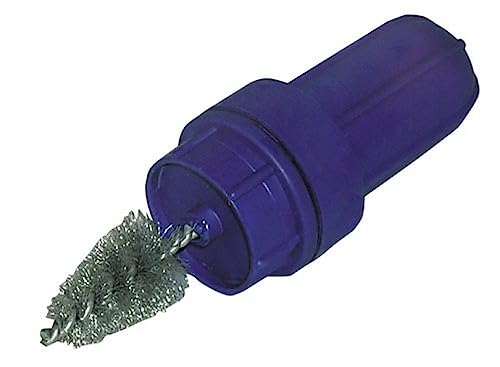
⚪ Alternative 2: Lisle 11120 Battery Brush
Best for: Anyone dealing with corroded battery terminals and posts that need physical scrubbing, not just a spray.
Key specs: Manual terminal brush | check listing for brush style | reusable metal construction | check listing for dimensions
Where it beats the main product: It physically scrubs away heavy corrosion, which the CRC solvent can loosen but never scrape off.
Where it falls short: It does nothing for circuit boards, relay switches, or flux removal — the CRC’s whole job.
If you want a second solvent option for the bench, the WD-40 Specialist is a fair swap, but the CRC’s 15,620 reviews and #1 rank in Electrical Cleaners make it my default. I’d only reach for the Lisle battery brush when I’m fighting crusted terminals, since no spray replaces physical scrubbing. For board and contact cleaning, the CRC stays in my hand.
How It Actually Performs
Evaporation Speed
The quick-dry claim is the part I noticed first. The petroleum distillate and alcohol mix flashes off fast enough that I can spray a board, let it sit a moment, and get back to work without babysitting it. That speed matters most on relay switches and sockets where I don’t want liquid hanging around. It’s not instant, but it’s quick enough that the 11-fluid-ounce can doesn’t feel like it’s wasting my time.
Residue and Contact Cleanliness
This is where the CRC QD Electronic Cleaner earns its keep. After the solvent dries, contacts look clean with no oily film, which is exactly what the residue-free label promises. I’ve used it on circuit boards and contacts and haven’t seen the greasy buildup that some cleaners leave behind. That clean finish is why it helps prevent contact failure — nothing is left to attract dust or interfere with a connection.
Plastic and Surface Safety
I was cautious the first time I sprayed near nylon plugs and PVC, but the plastic-safe formula held up. No clouding, no softening, no visible damage on the fiberglass and plastic surfaces I tested. That said, I still spot-test on anything unfamiliar, because “plastic safe” covers a lot of ground. On the materials CRC lists — plastics, nylon, PVC, fiberglass — I had no issues at all.
Coverage and Can Handling
The 11-fluid-ounce aerosol gives solid coverage for small jobs, and the 14.4-ounce total weight feels balanced rather than clumsy. The spray pattern is controllable enough for tight spots around sockets and coin mechanisms, though it’s still an aerosol — no precision dropper here. One can has handled a good run of board and contact cleaning without running dry, which lines up with the 10K+ bought in the past month.
Who Is This Electronic Cleaner Best For?
This can fits a pretty specific crowd — people who work on electronics and want a clean, dry finish without extra steps. Here’s how I’d sort out who should grab it.
✅ This Is a Great Fit If You…
- You solder and need reliable flux removal — the residue-free formula cleans up boards without leaving a film behind.
- You tinker with computer components, relay switches, or sockets and want a spray that dries fast on an 11-fluid-ounce can.
- You work around plastics, nylon, and PVC and need a plastic-safe solvent you can trust near sensitive parts.
- You keep a bench stocked and want a top seller — it’s #1 in Electrical Cleaners with over 10K bought in the past month.
❌ You Might Want to Look Elsewhere If…
- You need corrosion protection too — the CRC QD Electronic Cleaner is a pure solvent with no lubricating additive, so it cleans but doesn’t guard contacts long-term.
- You want a precision applicator — this is an aerosol can only, with no dropper or brush for tiny spots.
- You’re sensitive to fumes — it’s listed as unscented, but the solvent smell is still noticeable, so ventilate well.
My number one pick is aimed at the DIY electronics tinkerer who wants a fast-drying, no-residue cleaner for boards and contacts. If that’s you, this can earns its spot on the bench.
- QD ELECTRONICS CLEANER: A...
- FORMULA: With quick-drying...
- APPLICATIONS: QD Electronic...
Common Issues & Fixes
Aerosol cleaners are simple tools, but a few things can trip you up. Here’s what I’ve run into and how I handle it.
Fumes in a Small Workspace
The problem: The solvent smell is noticeable even though the formula is listed as unscented, and a closed room gets stuffy fast.
My fix: I spray near an open window or with a fan moving air, and I keep the can at arm’s length. Short bursts beat long sprays for both fumes and waste.
Spray Getting on Parts You Didn’t Mean to Clean
The problem: An aerosol goes everywhere, and overspray can hit connectors or plastic you wanted to leave alone.
My fix: I shield nearby parts with a rag or cardboard and spray in short controlled bursts. For tight spots around sockets, I angle the nozzle rather than holding it close.
Wondering If a Surface Is Actually Plastic Safe
The problem: CRC lists plastic, nylon, PVC, and fiberglass as safe, but not every plastic is the same.
My fix: I spot-test on a hidden area first and wait for it to fully dry. If there’s no clouding or softening, I go ahead with the full spray.
Expecting Protection That Isn’t There
The problem: People assume a contact cleaner also protects against corrosion, then wonder why terminals tarnish again.
My fix: I treat this as a cleaner only and follow up with a separate protectant when I need lasting corrosion defense. It’s a pure solvent with no lubricating additive.
Warranty & Support
CRC backs the can with a limited warranty, and Amazon’s voluntary 30-day return guarantee covers many purchases. For help, I’d start with the CRC Industries support page or the Amazon listing, and check the warranty details there before assuming coverage.
- QD ELECTRONICS CLEANER: A...
- FORMULA: With quick-drying...
- APPLICATIONS: QD Electronic...
Frequently Asked Questions
Is CRC QD Electronic Cleaner safe on plastic?
Yes, the formula is plastic safe and CRC lists plastics, nylon, PVC, and fiberglass as fine to use it on. I’ve sprayed it near nylon plugs and PVC without any clouding or softening. That said, I still spot-test on anything unfamiliar before going all in, since no two plastics behave exactly the same.
Does it leave any residue behind?
No, and that’s the whole selling point. The petroleum distillate and alcohol mix evaporates quickly and dries clean, so contacts and boards don’t get an oily film. I’ve checked after it dries and there’s nothing left to attract dust or interfere with a connection. That clean finish is why it helps prevent contact failure.
Can I use it to clean circuit boards and remove flux?
That’s exactly what it’s built for. CRC lists circuit boards, flux removal, contacts, sockets, and relay switches among the applications, and I’ve used it on boards after soldering with good results. Just spray in a ventilated area and let it flash off before powering anything back up.
How big is the can and how much does it weigh?
The can holds 11 fluid ounces and the total item weight is 14.4 ounces, so it feels balanced in hand without being heavy. That’s a single-can size, and one can has handled a good run of small jobs for me. It’s a solid pick for keeping on the workbench without taking up much space.
Does it protect against corrosion?
No, and this is the honest catch. It’s a pure solvent with no lubricating or protective additive, so it cleans contacts but doesn’t guard against future tarnish. If I need lasting corrosion defense, I follow up with a separate protectant after the cleaner dries.
How is it rated by other buyers?
It holds a 4.8 out of 5 rating across 15,620 reviews and ranks #1 in Electrical Cleaners, with over 10K bought in the past month. That tracks with my experience — it does one job well and does it fast. The main thing to know going in is that it cleans without protecting.
My Final Verdict
The CRC QD Electronic Cleaner is a straightforward solvent that does its one job well, and I’d recommend it to anyone cleaning circuit boards, contacts, or flux who wants a fast-drying, no-residue finish. The 11-fluid-ounce aerosol evaporates quickly, stays plastic safe on nylon and PVC, and holds a 4.8 out of 5 across 15,620 reviews. I’d skip it if you expect corrosion protection or need a precision applicator, because it’s a pure solvent in an aerosol can.
That lack of a protective additive is the real limitation, but it’s also why the cleaner works so cleanly. I’d still buy it as a bench staple and pair it with a separate protectant when long-term contact care matters.
Ready to Check the Price?
If you work on electronics and want a fast, residue-free cleaner for boards and contacts, this is worth a look for your bench.
As an Amazon Associate I earn from qualifying purchases at no extra cost to you.