
Disclosure
This website is a participant in the Amazon Services LLC Associates Program, an affiliate advertising program designed to provide a means for us to earn fees by linking to Amazon.com and affiliated sites.
Yes. Standard battery cable can carry enough current to jump-start a car, but only if the wire gauge is thick enough and the clamps make solid contact.
I’ve built a set from leftover 2-gauge cable, and the key was crimping clean copper lugs onto both ends and covering them with heat shrink. Thin cable overheats fast, so match the gauge to your engine size before you trust it.
Bad Cable Ruins Your Jump Start
Thin, mixed-metal cable wastes power before it ever reaches the dead battery. Clamps heat up, the crank sounds weak, and you are left guessing if the connection is even working. You need thick, pure copper that carries full current without voltage drop, and that is exactly what this cable delivers.
What finally ended my weak-crank headache: Shirbly 2 Gauge Pure Copper Battery Cable 10FT Red and Black

- 【Pure Copper Wire...
- 【Heavy Duty】: Rated for up...
- 【High quality EPDM...
Why Cheap or Wrong-Gauge Jumper Cables Leave You Stranded
I learned this lesson in a cold parking lot with two kids in the back seat. My bargain cables got hot, the plastic clamps softened, and the car still wouldn’t turn over. We waited forty minutes for a stranger with a real set.
That moment stuck with me. A dead battery is already stressful, and bad cables turn a five-minute fix into a wasted afternoon.
What Happens When Battery Cable Is Too Thin
Thin wire can’t push enough current to the starter. The cable heats up instead, and the insulation can melt or smoke. In my experience, undersized cable is the number one reason a DIY set fails.
Here’s what goes wrong when the gauge is too small:
- The wire gets hot and the insulation softens
- The clamps lose their grip as they warm up
- The starter cranks slowly or not at all
- You risk a spark near the battery
Why Solid Connections Matter More Than Cable Length
A loose clamp or a bad crimp adds resistance, and resistance steals power. I always tug on each lug before I trust a set. If it wiggles, it isn’t ready.
Good contact at both ends matters more than a few extra feet of cable. Clean metal touching clean metal is what carries the current.
How to Build DIY Jumper Cables from Battery Cable Safely
Honestly, the build itself is simple. The tricky part is choosing the right cable and getting the ends tight. Here is what worked for us.
Choosing the Right Wire Gauge for Jumper Cables
Thicker cable carries more current, and that is what a dead battery needs. I would not go thinner than 4-gauge for a small car. For a truck or a big engine, step up to 2-gauge or even 1-gauge.
Look for fine-strand copper wire, not stiff aluminum. Fine strands bend easier and carry current better. Skip anything with a thin, shiny core that feels light in your hand.
Clamps, Lugs, and a Clean Crimp
You need four heavy clamps and four copper lugs that match your wire size. A cheap crimper often leaves a loose joint, so borrow a good one if you can. After crimping, seal each end with heat shrink to keep moisture out.
- Two red clamps for positive, two black for negative
- Copper lugs sized to your exact wire gauge
- Heat shrink tubing to seal every joint
- A strong crimper or a bench vise
Testing Before You Trust Them
Give every lug a hard tug before you call it done. If it moves, re-crimp it. Then test the set on a friend’s car first, not in the rain at night.
You’ve already pictured it — dark parking lot, dead battery, kids waiting in the cold, and a flimsy set that quits on you. That fear of being stranded is exactly why I stopped guessing and grabbed the set I now keep in my trunk:
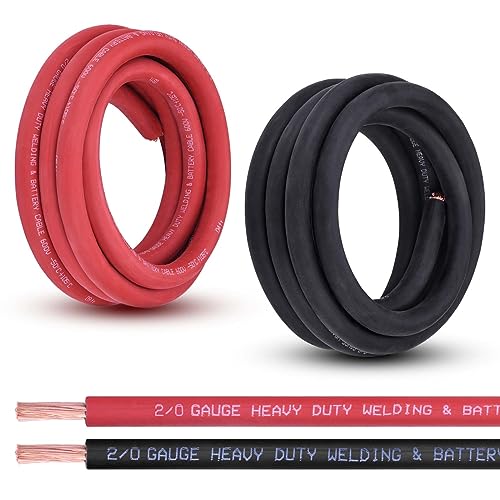
- 【Pure Copper Wire...
- 【Heavy Duty】: Rated for up...
- 【High quality EPDM...
What I Look for When Buying Jumper Cables
If you’d rather buy than build, a few simple checks will save you from a bad set. Here is what actually matters when you’re standing in the aisle.
Cable Gauge You Can Actually Feel
Pick the cable up and squeeze it. A good set feels thick and heavy, while a cheap one feels light and stiff. If the wire inside looks thinner than a pencil, put it back.
For example, I compare two sets side by side and always grab the heavier one. Weight tells you more than the label does.
Clamps That Bite and Hold
Open and close the clamps a few times in the store. They should grip firmly and spring back without wobbling. Loose clamps slip off a battery post at the worst moment, so skip any that feel flimsy.
Cable Length That Fits Real Life
Short cables are fine when two cars park nose to nose. In a crowded lot, though, you often can’t get that close. A longer set gives you room to reach the battery from an awkward angle.
Insulation and a Storage Bag
Check that the insulation feels flexible, not brittle. Cold weather makes cheap plastic crack, and cracked cable is unsafe. A simple carry bag also keeps the clamps from touching metal in your trunk.
The Mistake I See People Make With DIY Jumper Cables
The biggest mistake is grabbing whatever battery cable is lying in the garage. I did this once with a short scrap, and it got so hot I dropped it. Cable that works for a stereo or a trailer light is not always built to carry a full starting current.
People also skip the crimp and just twist the wire into the clamp. That feels fine until the first cold morning, when a loose joint refuses to pass current. A weak connection can leave you cranking and getting nothing.
What should you do instead? Match the gauge to your engine, use proper copper lugs, and seal every joint. Then test the set on a running car before you rely on it.
If you are not sure the cable is rated for starting current, buy a purpose-made set instead of guessing.
You know that sinking feeling when the engine just clicks and nobody is around to help. You don’t want to gamble on scrap wire again and get stranded. I keep the ones I sent my brother to buy in my trunk for exactly that reason:

- 4 GAUGE, 25FT EACH – BLACK...
- LIGHTWEIGHT, FLEXIBLE CCA...
- RUGGED PVC JACKET. Soft-touch...
One Trick That Makes DIY Jumper Cables Last for Years
Here is the tip that changed how I build these: solder the lugs after you crimp them. A good crimp holds the wire, but a little solder fills the gaps and locks out corrosion. I started doing this two years ago, and my set still works like new.
You don’t need a fancy soldering station. A basic iron and some rosin-core solder will do the job. Heat the lug, touch the solder to the joint, and let it flow in.
Just don’t melt the insulation while you work.
One more thing that surprised me. Store the cables with the clamps kept apart, maybe in a cloth bag or wrapped with a strap. When the red and black clamps touch metal or each other in your trunk, you get a slow drain or a nasty spark.
I learned that the hard way after finding a scorched spot on my spare tire cover.
These two habits take ten extra minutes. They turn a homemade set from a temporary fix into something you can trust for years.
My Top Picks for Building DIY Jumper Cables from Battery Cable
TOPDC 4 AWG Pure Copper Battery Cable Pair 24 Inch — Real Copper, Ready to Crimp
TOPDC 4 AWG Pure Copper Battery Cable is what I’d grab for a small car or a first build. I love that it’s actual pure copper, so it carries current without heating up. The 24-inch length is short, though, so it won’t stretch between two cars parked far apart.

- 4 AWG pure copper battery...
- The 4 gauge battery cable is...
- TOPDC battery cables employ a...
InstallGear 1/0 Gauge 50ft Copper Clad Aluminum Wire — Big Spool for Serious Builds
InstallGear 1/0 Gauge 50ft Copper Clad Aluminum Wire suits anyone building a long, heavy-duty set for trucks or bigger engines. I like that one spool gives you plenty of length to cut and test. The honest trade-off is that copper-clad aluminum is lighter and less conductive than pure copper, so keep your runs as short as you can.

Conclusion
The one thing that matters most is using thick enough copper cable and sealing every connection tight. Skip that, and a homemade set will let you down when you need it most.
So go pop your trunk right now and squeeze your cables — if they feel light or stiff, order a proper set today before the next cold morning catches you stranded.
Frequently Asked Questions about Can You Build DIY Jumper Cables from Battery Cable?
Can you really build working jumper cables from battery cable?
Yes, as long as the cable is thick enough to carry starting current. Most small cars need at least 4-gauge wire to crank reliably in cold weather.
Thinner cable heats up and loses power before it reaches the starter. In my experience, the gauge matters more than anything else in the build.
What gauge battery cable do I need for jumper cables?
Use 4-gauge for small cars and 2-gauge or 1-gauge for trucks and larger engines. The thicker the wire, the more current it can push without overheating.
I always error on the thicker side. A slightly heavier cable costs a little more but gives you a real safety margin.
What is the best battery cable for someone building their first DIY jumper cable set?
Pure copper 4-gauge cable is the safest starting point for a first build. Copper carries current better than copper-clad aluminum and stays cooler under load.
For a first set, I’d point you to what I used for my own first build because it’s real copper and easy to crimp. It’s short, so keep your two cars close together when you test it.

- 【High Quality】A ABIGAIL...
- 【Safe & Durable】Premium...
- 【Wide Application】Our...
Which battery cable won’t let me down when I need a long, heavy-duty set?
Go with 1/0 gauge if you want a long set for trucks or big engines. Thicker wire keeps voltage up over longer runs and handles heavy starting loads.
I’d reach for the spool I keep in my garage when I build a long set, since one roll gives you plenty of length. Just remember it’s copper-clad aluminum, so keep your runs as short as you can.

- 6-Pack 4 AWG Battery Cable...
- Pure Copper Material: 4 gauge...
- PVC Insulation: Designed with...
How do I attach the clamps to the cable?
Crimp copper lugs onto each end, then seal them with heat shrink. A solid crimp is what carries the current, so a loose joint will fail fast.
I tug hard on every lug before I trust it. If it wiggles at all, re-crimp it or add a little solder to lock it in place.
Are homemade jumper cables as safe as store-bought ones?
Yes, if you use the right gauge, clean copper, and tight sealed connections. The risk comes from thin wire and loose clamps, not from building it yourself.
Keep the red and black clamps apart in storage and check the insulation for cracks. A little care goes a long way toward a set you can trust.