Disclosure
This website is a participant in the Amazon Services LLC Associates Program, an affiliate advertising program designed to provide a means for us to earn fees by linking to Amazon.com and affiliated sites.
Battery cable gauge and length matter because both control resistance: a cable that is too thin or too long wastes power as heat and can cause a dangerous voltage drop. A cable sized correctly for the current and run length keeps voltage steady and stays cool under load.
I learned this the hard way when a long, thin run to my truck bed winch turned sluggish and warm to the touch. Short, thick cable runs less resistance, so always match wire gauge to amps and keep the run as short as you can.
Stop Melting Wires and Losing Power
Thin cable and the wrong length cause voltage drop, hot wires, and weak starts. I have seen undersized cable melt insulation and kill a winch motor fast. The WotyWire 2 Gauge Heavy Duty Battery Cable 10FT Red Black gives you true 2 gauge copper in a 10-foot run, so current flows clean and stays cool.
What ended my voltage drop headache for good: WotyWire 2 Gauge Heavy Duty Battery Cable 10FT Red Black
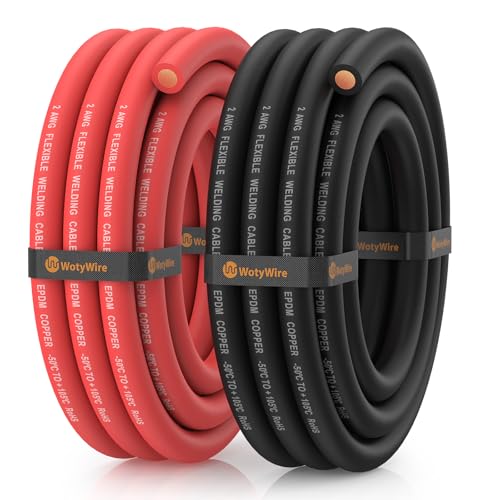
- Superior Conductivity: This...
- Extremely Flexible: 2 AWG...
- Long-lasting Insulation: This...
What Happens When Battery Cable Gauge and Length Are Wrong
A wrong cable size does not usually fail all at once. It shows up as slow starts, weak winches, or a cable that gets hot enough to melt its own insulation. I have seen a thin cable glow red under a load it was never built to carry.
Why an Undersized Battery Cable Is a Real Safety Risk
Too much resistance turns lost power into heat. That heat can strip insulation, melt connectors, and in bad cases start a fire near your battery. In my experience, the damage hides under the hood until the day it matters most.
I once helped a friend who kept blaming his battery for hard starts. We traced it to a long, skinny cable, and swapping it for the right gauge fixed everything in an afternoon.
Why a Cable Run That Is Too Long Hurts Performance
Every extra foot of cable adds resistance and drops voltage. A winch or starter at the end of a long run may spin slow or stall under load. Keep runs short and size up the gauge when you cannot.
Why the Wrong Size Wastes Your Money and Time
Buying the wrong cable means paying twice, plus hours of rework. I have watched people replace a good battery because a cheap cable was the real problem all along. Getting gauge and length right the first time is the cheapest path.
- Slow cranking that points to the cable, not the battery
- Warm or hot cables after a short load
- Voltage drop at the far end of a long run
How to Choose the Right Battery Cable Gauge and Length
Honestly, picking the right cable is not hard once you know what to check. I start with the amps the load will pull, then work backward to the gauge. The length comes next, because the run itself changes the answer.
Match Wire Gauge to the Current Draw
Every load has a current rating, and your cable has to carry it without heating up. In my experience, going one size thicker than the minimum is cheap insurance. It runs cooler and gives you room to grow.
Here is what I keep in mind when sizing a run:
- Add up the amps of everything on the circuit
- Measure the full round trip, positive and ground
- Round up to the next gauge when you are close
Keep the Cable Run as Short as You Can
Long runs bleed voltage, so mount the battery as close to the load as practical. When we could not shorten a run, we sized up the cable instead. That kept the voltage steady at the far end.
Check the Terminals and Connections
A thick cable with a loose lug still fails. I always crimp, seal, and tighten every connection, then check them again after a week. Good cable is only as strong as its weakest joint.
You keep worrying that a cheap cable will quit on you miles from home, or fry something expensive. That fear is real, and it is exactly why I stopped guessing and grabbed the ones I sent my brother to buy: the ones I sent my brother to buy.
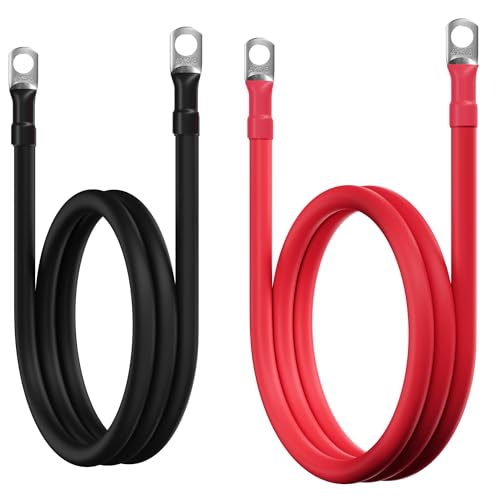
- Premium Conductor: Oxygen-free...
- High-Strength Flexible Jacket...
- Easy Installation: Available...
What I Look for When Buying Battery Cable
When I buy battery cable, I skip the flashy labels and check four things that actually matter. You do not need to be an electrician to spot them.
The Wire Gauge Matches Your Load
Gauge is the thickness of the wire, and thicker carries more current. Look at the label and confirm the gauge fits your amps and run length. When I ran a winch on my truck, I picked a heavier gauge than the chart said, and it never got warm.
The Copper Is Real Copper
Good cable uses fine copper strands, not aluminum or copper-coated wire. Copper carries current better and flexes without cracking. I always cut a small sample or check the listing before I buy.
The Insulation Handles Heat and Oil
Your cable lives near heat, oil, and vibration, so the jacket has to hold up. Look for insulation rated for high temperatures and resistant to oil. The cheap cable I bought once went stiff and cracked within a year.
The Lugs and Terminals Are Solid
A great cable with a weak lug is still a weak link. Check that the terminals are crimped or sealed properly and match your battery posts. I tug on every lug before I trust it.
The Mistake I See People Make With Battery Cable
The biggest mistake I see is buying cable by length alone and ignoring the gauge. People grab whatever is on the shelf and hope it works. I wish someone had told me earlier that the gauge decides whether your cable runs cool or cooks.
Another common slip is measuring only the positive run and forgetting the ground. The current travels the whole loop, so the return path counts too. When I sized my last setup, I measured both sides and picked the gauge for the longer one.
What should you do instead? Start with your amps, measure the full round trip, and round up to the next gauge. Then check that the lugs match your posts and tighten everything down.
That small bit of homework saves you from a dead battery on a cold morning.
You dread the moment your truck will not crank in a parking lot, or a cheap cable fails and leaves you stranded. That worry is why I stopped cutting corners and went with what finally worked: what finally worked.

- 【High Quality】A ABIGAIL...
- 【Safe & Durable】Premium...
- 【Wide Application】Our...
One Simple Trick That Saves You From a Dead Battery
Here is the tip that changed how I wire everything: size your cable for the round trip, not just the positive run. Most people measure once and forget the ground path. That return leg adds resistance too, and it can quietly steal your starting power.
My aha moment came when I measured the full loop on my old truck. The positive side looked fine, but the ground cable was long and thin. Swapping it for a shorter, thicker one made the starter spin faster than it had in years.
So grab a tape measure and run it along both cables. Add the lengths together, then check that number against a wire gauge chart for your amps. If you land close to a limit, go one size thicker.
It costs a little more up front and saves you a tow later.
I recommend doing this before you buy anything, not after. Five minutes with a tape measure beats an afternoon of guessing why your rig will not start.
My Top Picks for Getting Battery Cable Gauge and Length Right
A ABIGAIL 3FT 2 AWG Pure Copper Battery Inverter Cables — Short, Thick, and Built to Stay Cool
A ABIGAIL 3FT 2 AWG Pure Copper Battery Inverter Cables are what I reach for when the battery sits close to the load. The 2 AWG pure copper carries big amps over that short 3-foot run without warming up. It is a perfect fit for winches and inverters mounted near the battery.
The trade-off is simple: 3 feet is short, so measure first.
- 【High Quality】A ABIGAIL...
- 【Safe & Durable】Premium...
- 【Wide Application】Our...
A ABIGAIL 4 AWG 6FT Pure Copper Battery Inverter Cable — The Longer Run I Trust for Moderate Loads
A ABIGAIL 4 AWG 6FT Pure Copper Battery Inverter Cable suits setups where the load sits farther from the battery. The pure copper 4 AWG handles moderate current, and the extra 6 feet gives you room to route it cleanly. I like it for smaller inverters and accessory runs.
The honest catch is that 4 AWG has less headroom, so size up for heavy draws.

- 【High Quality】A ABIGAIL...
- 【Safe & Durable】Premium...
- 【Wide Application】Our...
Conclusion
The one thing that matters most is matching your cable gauge to the current and the full run length.
So grab a tape measure right now and check both cables on your setup — it takes five minutes, and it might be the reason your rig finally starts strong every time.
Frequently Asked Questions about Why Does Correct Gauge and Length Matter for Battery Cable?
Does battery cable length really affect performance?
Yes, every extra foot of cable adds resistance and drops voltage at the load. A long run can make a starter crank slow or a winch stall under load.
That is why I keep runs as short as I can and size up the gauge when I cannot. A shorter, thicker cable almost always beats a long, thin one.
What gauge battery cable do I need for a 100 amp load?
For a 100 amp load, most charts point to around 4 AWG for short runs and heavier gauge as the length grows. Always check a wire gauge chart for your exact run.
I round up one size when I am close to a limit. It runs cooler and leaves room if you add accessories later.
What is the best battery cable for someone who needs a short, high-current run?
The best pick for a short, high-current run is a thick pure copper cable like 2 AWG, because it carries big amps without heating up. Pure copper strands keep resistance low over that short distance.
For my own winch setup, I went with the ones I sent my brother to buy, and it has stayed cool under load ever since.
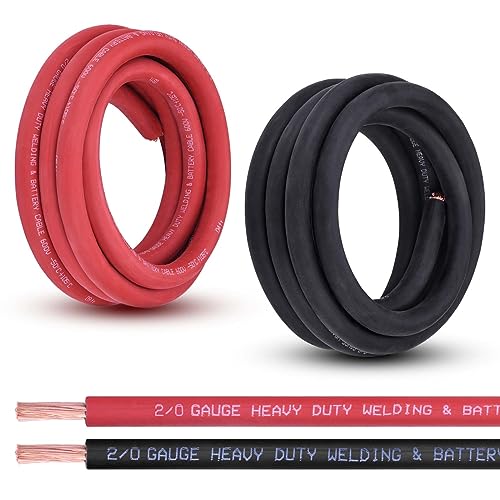
- 【Pure Copper Wire...
- 【Heavy Duty】: Rated for up...
- 【High quality EPDM...
Which battery cable won’t let me down when the load sits far from the battery?
A 4 AWG pure copper cable in a longer length is the safer choice when the load sits far from the battery. The copper keeps resistance low, and the extra length gives you room to route it cleanly.
I keep what finally worked on hand for moderate runs like smaller inverters and accessory lines. Just size up if your draw is heavy.
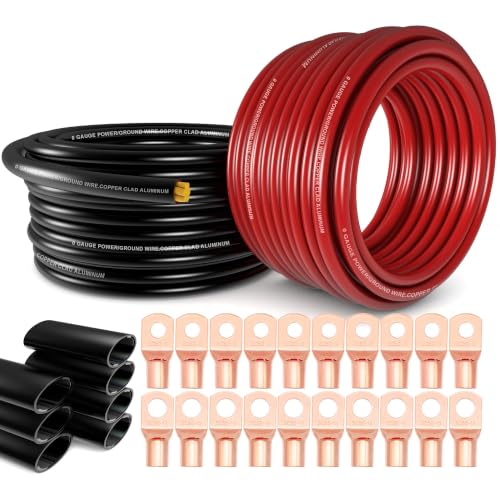
- 1/0 GAUGE CCA POWER/GROUND...
- HIGH QUALITY MATERIALS...
- RUGGED, FLEXIBLE PVC JACKET...
Can I use a cable that is too thick?
Yes, a thicker cable is safe and simply runs cooler than needed. The only downsides are cost, weight, and stiffer routing.
In my experience, going one size up is cheap insurance. It gives you headroom and never hurts performance.
How do I measure the correct cable length?
Measure the full round trip, both the positive run and the ground return, then add them together. The current travels the whole loop, so both sides count.
I use a piece of string to trace the route, then measure the string. Add a little slack for vibration and you are set.