
Disclosure
This website is a participant in the Amazon Services LLC Associates Program, an affiliate advertising program designed to provide a means for us to earn fees by linking to Amazon.com and affiliated sites.
Color-coded battery cables prevent wiring confusion because standard red and black insulation lets anyone identify positive and negative terminals at a glance, avoiding reversed connections. Red marks the positive post and black marks the negative post, a convention followed across most batteries and vehicles.
I learned this the hard way after once guessing at a tangle of identical black wires. Now I check the red cable first, trace it to the positive post, and confirm the black one runs to ground before I touch a tool.
Stop Guessing Which Cable Goes Where
Running thick cables to a battery bank or winch and guessing which lead goes where is how sparks happen. One wrong hookup can fry an alternator or melt a terminal in seconds. The WotyWire cable comes in red and black, so positive and negative are obvious before you even grab a wrench.
What finally ended my cable guessing game: WotyWire 2 Gauge Heavy Duty Battery Cable 10FT Red Black
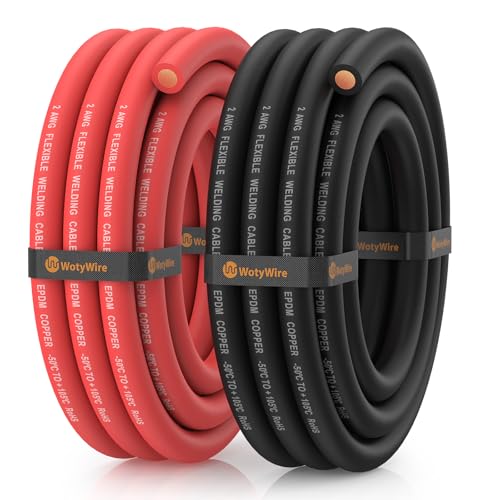
- Superior Conductivity: This...
- Extremely Flexible: 2 AWG...
- Long-lasting Insulation: This...
Why Wrong Battery Cable Connections Matter More Than You Think
A reversed battery connection can fry an alternator, kill a control module, or melt a cable in seconds. I have seen a simple mix-up cost a friend a full weekend and a tow truck bill. The scary part is how fast it happens.
The Real Cost of a Two-Second Mistake
My neighbor once swapped the cables on his truck in the dark. He heard a crack, saw a spark, and watched smoke curl off the main fuse. That one mistake took out his radio, his headlights, and his charging system.
In my experience, most people do not realize how much rides on getting it right. Modern cars pack sensitive electronics into every corner. One wrong touch can send a surge through parts that were never meant to see it.
Why It Hits Your Wallet and Your Patience
Repairs add up fast. A new alternator, a fresh fuse box, or a replacement module can drain a savings account in an afternoon. That is money gone for a mistake that color coding was built to prevent.
- Burned cables and melted terminals
- Dead alternators and drained batteries
- Fried fuses and damaged control modules
- Lost time waiting on a tow or a mechanic
I keep red and black cables on hand for this exact reason. It is a small habit that saves a lot of grief.
How Color-Coded Battery Cables Prevent Wiring Confusion in Daily Use
Color coding works because it removes the guesswork before your hands even move. Honestly, it is the simplest safety habit I know, and it costs almost nothing.
Red and Black: A Rule Anyone Can Follow
Red always means positive and black always means negative. My kids learned this rule before they could spell. That means even a nervous first-timer can get it right.
I still say it out loud when I work: red to positive, black to ground. Saying it keeps my hands honest when I am tired.
Why It Beats Labels and Guesswork
Printed labels fade, and tiny terminal stamps vanish under grime. Color stays visible even in low light or bad weather. In my experience, that is what actually prevents mix-ups.
- Spot the cable from across the engine bay
- Trace each wire without touching a terminal
- Work safely in the dark or the rain
- Teach new drivers a habit they keep for life
We keep a roll of red and black tape in the toolbox for older cables. It takes two minutes and turns a guessing game into a clear routine.
You know that sinking feeling when a spark flies and you are not sure what just died? Stop gambling with bare wires and grab the color-coded cables I keep in my own garage:

- 【Pure Copper Wire...
- 【Heavy Duty】: Rated for up...
- 【High quality EPDM...
What I Look for When Buying Color-Coded Battery Cables
After years of swapping cables, I have learned that a few simple things matter far more than fancy specs. Here is what I check before I spend a dime.
Clear, Faded-Proof Colors
You want insulation that stays truly red and truly black, not a muddy brown after a few months. I once bought a cheap set that faded to gray within a season, and the color rule stopped working. Look for cables where the color runs through the jacket, not just painted on top.
Thick Enough for the Job
Thicker copper carries more current without heating up. For a normal car, I reach for a cable that feels substantial in my hand, not flimsy. If it bends like a noodle, it will struggle on a cold morning start.
Terminals That Grip Tight
A loose clamp causes sparks, and sparks cause headaches. I always check that the terminals bite firmly on the post and stay put. In my experience, a snug fit matters more than any marketing claim on the box.
The Right Length and Flex
Too short and you are stretching; too long and you are tangling. Measure your run first, then add a little slack. I also flex the cable in the store, because stiff cables are a pain in tight engine bays.
The Mistake I See People Make With Color-Coded Battery Cables
The biggest mistake I see is trusting the color without checking the post. People assume red always lands on positive, but some older batteries and odd setups are wired differently. I wish someone had told me that before I nearly cooked a fuse.
Another common slip is relying on faded or aftermarket cables with no clear color at all. If the jacket has turned brown or the ends are wrapped in plain tape, that color code is gone. Instead, trace each cable by hand from post to post before you loosen anything.
My rule is simple: verify, then touch. I follow the red cable to its source, confirm the black one reaches ground, and only then pick up a wrench. It takes ten extra seconds and saves a whole lot of grief.
If the colors are unclear, replace the cable or mark it yourself with fresh tape.
You know that cold dread when a spark jumps and you are not sure what just fried? Skip the guesswork and start with the color-coded set I wish I had years ago:

- 【Pure Copper Wire...
- 【Heavy Duty】: Rated for up...
- 【High quality EPDM...
Mark Your Cables Once and Save Yourself Every Future Headache
Here is the tip that changed how I handle every battery job: label both ends of each cable before you disconnect anything. A strip of red tape on the positive end and black on the negative takes about a minute. That tiny habit means you never have to guess again, even months later.
What surprised me is how often the color fades or gets hidden under grime. Once I started tagging both ends, not just the terminal side, tracing a cable became instant. My aha moment came when I watched a friend squint at two identical black wires and give up.
Ten seconds of tape would have saved him an hour of worry.
I also keep a small roll of each color right in the toolbox, so there is no excuse to skip it. Whenever I swap a battery or add a new cable, the tape goes on before the wrench comes out. It sounds almost too simple, but that one step has kept every connection in my garage clear and safe.
My Top Picks for Color-Coded Battery Cable That Prevents Wiring Confusion
JURPLIX 1/0 Gauge CCA Battery Cable 20FT Red Black — My Go-To for Long Runs
JURPLIX 1/0 Gauge CCA Battery Cable 20FT Red Black gives me a full twenty feet of clearly colored red and black cable for bigger jobs. I love that the colors stay obvious along the whole length, so tracing runs is easy. It suits anyone wiring a truck, boat, or solar setup.
The copper-clad aluminum is lighter and cheaper than pure copper, so it is not the pick for extreme heavy-duty draws.

- High Power Capacity: 1/0 AWG...
- Copper Clad Aluminum (CCA...
- Durable PVC Jacket: The...
Linkstyle 6PCS 2 AWG Pure Copper Battery Cable Set 6 Inch — What I Grab for Short Jumps
Linkstyle 6PCS 2 AWG Pure Copper Battery Cable Set 6 Inch is what I reach for when I need short, sturdy connections with clear red and black ends. I really like the pure copper, which carries current well and stays cool. It fits folks doing tight terminal links or small upgrades.
The six-inch length is short, so measure before you buy.

- Complete 6PCS 2 AWG Cable Set...
- Premium Material: The 2 AWG...
- Tin-Plated Copper Terminals...
Conclusion
The single most important thing I have learned is that red and black cables are there to remove the guesswork, so always trust them and double-check the posts.
Go pop your hood right now and trace each cable from post to post — it takes under a minute and might save you a fried alternator tomorrow.
Frequently Asked Questions about Why Does Color-Coded Battery Cable Prevent Wiring Confusion?
Why is red always positive and black always negative on battery cables?
Red has marked the positive post and black the negative post for over a century, so the habit is baked into nearly every vehicle on the road. That shared standard means anyone, from a mechanic to a nervous first-timer, reads the same signal instantly.
I like it because it removes language and skill from the equation. Even in poor light, the color tells your hands where to go before your brain catches up.
Can I still mix up cables if the colors have faded?
Yes, faded or taped-over cables can absolutely trick you, which is why I never trust color alone. Once the jacket turns brown or gray, the whole safety system breaks down and guessing takes over.
My fix is simple: trace each cable by hand from post to post before touching a wrench. If the color is unclear, wrap fresh red and black tape on both ends so the code works again.
What is the best color-coded battery cable set for someone wiring a truck or boat?
The JURPLIX 1/0 Gauge CCA Battery Cable 20FT Red Black is a strong pick because its twenty-foot length covers long runs with clearly colored red and black jackets. The copper-clad aluminum keeps it light and affordable for bigger projects.
I would reach for the long set I keep for bigger jobs when the run is long and the budget matters. Just know it is not pure copper, so extreme heavy-duty draws may want something beefier.

- 6-Pack 4 AWG Battery Cable...
- Pure Copper Material: 4 gauge...
- PVC Insulation: Designed with...
Which color-coded battery cables won’t let me down on short terminal links?
The Linkstyle 6PCS 2 AWG Pure Copper Battery Cable Set 6 Inch is a reliable choice because the pure copper carries current well and the red and black ends stay easy to read. Six short pieces cover tight terminal links without extra slack.
I grab the short copper set I trust for tight spots whenever space is limited. Measure first, though, because six inches does not leave much room for error.

- 【Our Apologies】lf you were...
- 【High Quality】A ABIGAIL...
- 【Safe & Durable】Premium...
Does color coding actually prevent reversed connections?
Yes, color coding is one of the most effective safeguards against reversed connections because it gives your eyes a clear signal before your hands move. Most mix-ups happen in a hurry or in bad light, and color cuts through both.
That said, it only works if you check the posts too. I always confirm red to positive and black to ground, because a few older setups are wired in surprising ways.
How do I teach a new driver to read battery cable colors?
Teach the rule out loud: red to positive, black to ground, and have them repeat it before they touch anything. My kids learned it before they could spell, and it stuck.
Then let them trace each cable by hand while you watch. Doing it once with guidance builds a habit they keep for life.